
Tomorrow is your best friend’s birthday! To make it really special, you decide that you want to bake a chocolate cake. The only problem is you don’t actually know how to bake a cake.
The first thing you do is to reach for your phone or tablet. You Google recipes, watch a few tutorial videos on YouTube and browse a couple of articles. You then buy the ingredients, and as you are baking the cake, you check online (should the mixture be bubbling up like that?) and read comments on forums to confirm that the process is going well.
And voila! You have a birthday cake that you, a modern learner, have successfully learnt how to bake yourself!
The Case for Modernising Content

Learners today are different. Technology has drastically altered the landscape of learning. The pervasiveness of smartphones, the rise of short-form digital content, social media, and the ability to have the world’s knowledge at our fingertips have shaped how modern learners learn and expect to learn. Therefore, content built for the modern learner needs to match the profile of a modern learner to be effective.
So what makes a modern learner a modern learner?
Here are some characteristics of a modern learner based on what we have learned:
On-the-go. It is now commonplace for learners to use mobile technology to access information and dictate when they would be learning. It is very different from the past when the trainers or teachers decide the learning schedules. Modern learners leverage learning opportunities during a commute, lunch breaks, or between meetings. Convenience and accessibility have become vital for modern learners.
Impatient. Modern learners are used to getting the information they want at a moment’s notice and are not keen to wait very long to get results.
Easily distracted. Modern learners have short attention spans and think about many different things at once, check their phones frequently and seldom watch videos longer than a few minutes.
Social. More than any previous generation of learners, modern learners are more sociable than ever. They are incredibly active on social networks, collaborating, reaching out to people and receiving and sharing information.
Independent. Modern learners are used to taking the initiative to seek out the knowledge they need. They are curious and have high expectations of the content they receive. Modern learners have no qualms about rapidly switching content providers until they find one that meets their needs.
7 Ways to Modernise your Learning Content
So how can we, as content creators, create content that appeals to modern learners? The good news is that rather than starting from scratch, existing content such as long-form documents, PowerPoint slides or face-to-face training packages can be transformed into inspiring and engaging content for modern learners. Here are 7 ways in which we can modernise learning content.

#1 Blended Learning
Blending independent online learning with instructor-led learning is an effective and cost-efficient way to benefit from the best of both worlds. For example, in customer service training, learners can be introduced to concepts and best practices via an eLearning module, followed by a face-to-face workshop to practice their skills.
This way, companies can meet the needs of the digital learner while improving efficiency by maximising face-to-face training sessions and focusing on applying the knowledge acquired during their online learning.
#2 Microlearning
Research has shown that microlearning increases learning engagement by 50%. Microlearning breaks up lengthy training content into digestible bite-sized nuggets. Learning is delivered in small bursts, with each mini-lesson fulfilling small but essential parts of the ultimate learning objective.
This will allow learners to go through the modules quickly, at their own pace and time. These bits of bite-sized knowledge can also be recapped in later modules using spaced repetition to help with knowledge retention. Perfect for modern learners!

#3 Emotionally-Driven Content
Training content that captures a learner’s attention and invokes emotion will promote deep learning and increase knowledge retention. Storytelling and rich characters can be built around learning content using relatable narratives, videos and graphics to achieve this. The learner can relate better to the learning scenario and embarks on a personal journey to solve problems, experiment, acquire knowledge and construct a story of their own.
#4 Quality Content
The modern learner is used to consuming content with high-quality production, charismatic narrators and thoughtful content from the likes of Netflix documentaries or Masterclass lessons.
For instance, learning content on sales and persuasion can include case studies of scenarios where learners can meet customers of different profiles related to real-life customer encounters. The learners can then listen to tips and recommendations from the organisation’s top performers, practice their sales engagement skills in these scenarios, and even watch the development process of their products to better understand the business. This type of content engages the learners’ senses, and the combination of content relevant to their work will keep them curious and encourage them to continue progressing with their learning.

#5 Gamification
Another way to engage modern learners is by building in-game mechanics into learning content. Elements such as points, levels, avatars and badges can liven up traditionally considered dry topics such as compliance or finance. Additionally, gamification boosts learners’ motivation and engagement by tapping into the modern learner’s desire to achieve and compete with others.
#6 Social Learning
The modern learner is at home with social networks. Content created for modern learners should incorporate collaboration with peers, discussion forums where ideas can be shared, spaces where questions can be asked, and an area where learners can showcase their work.
Social learning formats such as role-playing and peer coaching can also be effective for learners, especially in soft skills training where there is no one correct answer. This diversity of perspectives and experiences can lead to more engaging learning content, environment and a richer, more effective learning experience.

#7 Variety of learning formats and devices
Modern learners enjoy learning from a variety of formats. To keep their attention, provide learners with a learning journey that includes videos, collaborative projects, scenario-based learning, simulations and more.
When developing eLearning content, we must remember that mobile-responsive design is vital. Modern learners will want to learn not only via classroom training or on a PC but through mobile learning, where they can access learning content easily on the go.
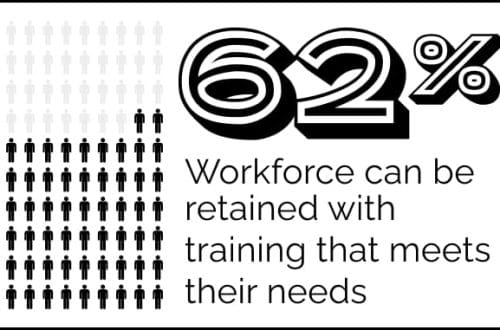
Today, providing modern learners with the training they need has become necessary to retain them
Modernising your learning content is crucial to keeping up with the evolving needs of today’s learners. By incorporating blended learning, microlearning, emotionally-driven content, high-quality production, gamification, social learning, and a variety of formats, you can create engaging and effective eLearning experiences.
Meeting the expectations of modern learners not only enhances their learning journey but also significantly impacts employee retention. Research by the IBM Institute for Business Value indicates that 62% of the workforce can be retained through training that meets their needs. Thus, investing in modernising your learning content is an investment in your workforce’s future.
View this post on Instagram
How Can We Help?
Interested in taking your eLearning initiatives to the next level with a value-driven approach? Our Interactive Immersive Learning Experience is crafted to elevate digital learning and create a long-term positive impact that reflects your corporate culture and goals.
Get in touch with us today to learn more! Email us at [email protected] or click here to contact us.